Download
Across Europe, care providers are facing a critical challenge. Residents are living longer with complex cognitive and social needs, while loneliness and social withdrawal continue to undermine health, well-being, and quality of care.
For managers in care homes, the question is no longer whether social isolation exists in care settings. It is how to address it effectively, at scale, and in ways that support both residents and staff.
Digital interactive environments powered by interactive game software are emerging as one of the most promising solutions. By enabling meaningful entertainment, encouraging mind engagement, and creating opportunities for stimulating interaction, these technologies can transform how residents connect, participate, and experience daily life in care environments. *1
Isolation in Care Homes. A Hidden Health Risk
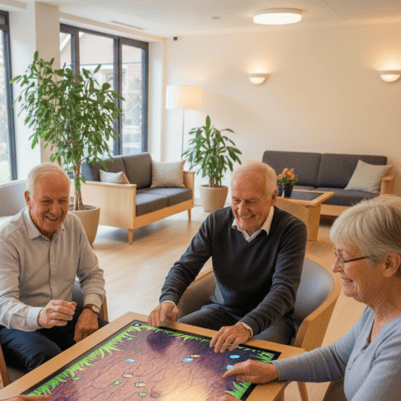 Loneliness is not simply an emotional concern. It is a major health risk with measurable consequences.
A systematic review found that around 61% of care home residents experience moderate loneliness and 35% severe loneliness, with rates higher than among older adults living in the community. *2
Research also shows that loneliness in nursing homes significantly affects quality of life and mental health, particularly as mobility declines and independence is lost. *3
More recent studies indicate that highly isolated residents face greater cognitive decline and depression, highlighting loneliness as a key risk factor for deterioration. *4
Implication for care leaders
Loneliness is directly tied to health outcomes, behavioural symptoms, and care complexity. Addressing it through stimulating interaction, meaningful entertainment, and consistent mind engagement improves both resident wellbeing and operational performance.
Why Traditional Engagement Approaches Fall Short
Common activities such as television viewing, crafts, or passive entertainment often fail to engage residents meaningfully.
Challenges include:
- Limited cognitive accessibility for residents with dementia
- Passive participation rather than active engagement
- Staff time constraints limiting facilitation
- Activities not tailored to individual abilities or interests
What residents need is not simply more activity. They need meaningful entertainment that encourages stimulating interaction and sustained mind engagement.
This is where modern interactive game software can significantly improve resident participation and engagement.
What Is a Digital Interactive Environment?
Digital interactive environments combine visual, auditory, tactile, and motion-based technologies to create engaging experiences that respond to resident input and encourage participation.
Examples include:
- Interactive touch tables and walls
- Motion-responsive projections and floor games
- Multi-sensory experiences combining sound, light, and movement
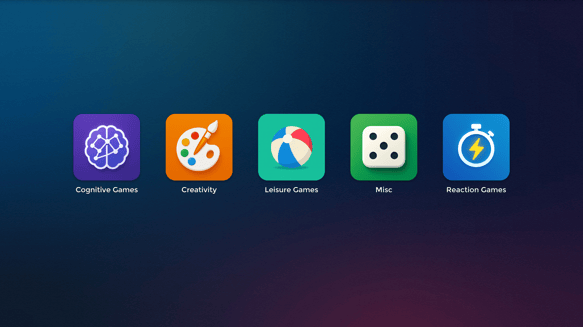
- Cognitive stimulation games powered by interactive game software
- Reminiscence and storytelling experiences designed for mind engagement
Unlike passive media, these solutions require participation. Residents interact, explore, and collaborate through stimulating interaction, turning everyday activities into meaningful entertainment experiences.
How Digital Interactivity Reduces Loneliness
1. Encouraging Shared Experiences
Interactive systems naturally attract group participation. Residents gather around a digital surface or projection to play, explore, or collaborate.
Shared activities powered by interactive game software spark spontaneous conversation and connection, creating moments of stimulating interaction and social bonding.
2. Enabling Communication Beyond Words
Residents living with dementia, stroke, or sensory impairment often struggle with traditional communication.
Touch and movement-based interactions allow them to participate without relying on memory or speech. These experiences support accessible mind engagement and ensure that all residents can enjoy meaningful entertainment.
3. Strengthening Family Connections
Interactive experiences provide meaningful ways for families and grandchildren to engage during visits, increasing visit quality and emotional connection.
Technology-mediated communication and digital engagement have been shown to enhance connection and reduce loneliness in dementia care contexts. *5
Shared digital activities also create stimulating interaction that turns visits into collaborative experiences rather than passive moments.
Cognitive and Emotional Benefits of Interactive Engagement
Interactive digital stimulation activates multiple cognitive pathways simultaneously, supporting ongoing mind engagement.
Research into technology-supported engagement shows that digital and assistive technologies can help detect and alleviate loneliness while supporting cognitive engagement. *6
Cognitive benefits include
- Memory activation through reminiscence content
- Attention and problem-solving stimulation
- Maintenance of neural pathways through sensory engagement
- Continuous mind engagement through interactive challenges
Emotional benefits include
- Reduced agitation and anxiety
- Improved mood and positive affect
- Sense of achievement and autonomy
- Increased motivation to participate in stimulating interaction
Residents who experience meaningful entertainment through interactive systems are often calmer, more cooperative, and more socially engaged.
Promoting Gentle Physical Activity Through Play
Motion-based interactive experiences powered by interactive game software encourage safe and enjoyable movement.
Residents can participate seated, standing, or with mobility aids.
Benefits include:
- Improved coordination and balance
- Increased daily activity levels
- Enhanced confidence in movement
- Reduced fall risk through guided stimulating interaction
Because activities feel like play rather than exercise, residents are more motivated to participate. This combination of movement and meaningful entertainment increases engagement significantly.
Supporting Staff and Operational Efficiency
IInteractive environments also support care delivery.
Reduced agitation and behavioural incidents
Residents who experience regular mind engagement show fewer distress behaviours.
Structured engagement without complex preparation
Staff can facilitate meaningful entertainment quickly using intuitive interactive game software.
Person-centred care delivery
Content can be tailored to cognitive ability, culture, and interests, ensuring accessible stimulating interaction for every resident.
Improved family satisfaction
Families see residents engaged, active, and enjoying mind engagement activities.
Where Game-Based Digital Solutions Make a Difference
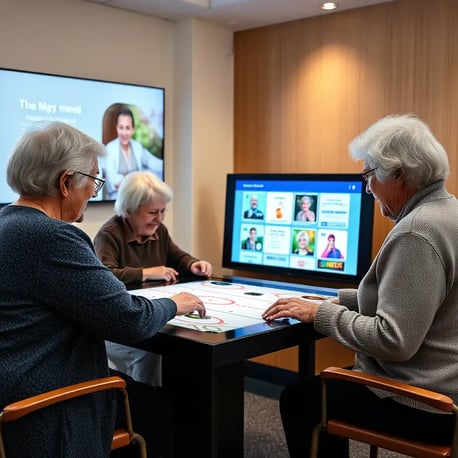
Game-based interactive platforms offer a particularly effective approach because they combine:
- Cognitive stimulation
- Physical movement
- Social participation
- Emotional engagement
- Continuous mind engagement
Platforms such as NUITEQ Campfire from NUITEQ demonstrate how interactive game software can transform digital displays into collaborative engagement platforms.
Campfire is designed specifically for care and therapeutic environments. It turns large touch displays into interactive activity hubs that promote collaboration, movement, meaningful entertainment, and stimulating interaction among residents.
How Campfire Contributes to Reducing Isolation
Social Engagement Through Shared Play
Campfire’s multi-user games encourage residents to play together rather than individually, fostering conversation and stimulating interaction.
Accessible Interaction for All Abilities
Large touch surfaces and intuitive gameplay allow residents with cognitive or physical limitations to participate independently in meaningful entertainment.
Cognitive Stimulation Without Complexity
Games are designed to support mind engagement, stimulating memory, attention, and reaction without overwhelming users.
Movement and Physical Activation
Interactive activities encourage reaching, stretching, and coordinated movement through engaging interactive game software.
Meaningful Family Interaction
Visiting relatives can join activities, creating shared stimulating interaction experiences.
Reduced Staff Burden
Staff can initiate meaningful entertainment activities quickly without extensive planning or training.
By combining play, collaboration, and sensory engagement, game-based interactive game software helps transform communal spaces into vibrant social hubs.
Implementation Considerations for Managers at Care Homes
To maximise impact, care providers should evaluate:
Ease of use
Systems must be intuitive for both staff and residents.
Accessibility
Interfaces must support mobility, cognitive, and sensory limitations.
Content adaptability
Activities should support different levels of mind engagement and cultural contexts.
Staff onboarding
Successful adoption depends on training and ease of use.
Integration into daily routines
Interactive engagement should deliver meaningful entertainment and stimulating interaction without complicating workflows.
A Strategic Investment in Wellbeing and Quality of Care
Loneliness and social isolation are among the most pressing challenges in residential care. Digital interactive environments powered by interactive game software offer a scalable, evidence-informed approach to improving wellbeing while supporting staff and operational efficiency.
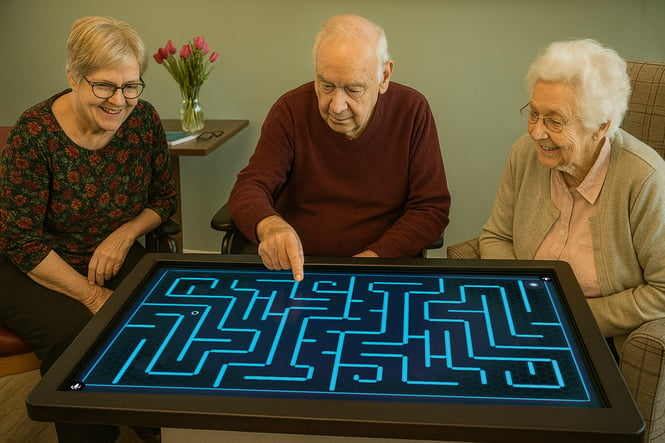
Solutions such as NUITEQ Campfire show how technology can move beyond passive entertainment to create meaningful entertainment, sustained mind engagement, and real social connection through stimulating interaction.
By transforming communal spaces into interactive environments, care homes can:
- Reduce loneliness and withdrawal
- Improve cognitive and emotional well-being through mind engagement
- Increase physical activity and participation
- Deliver meaningful entertainment residents enjoy
- Support staff efficiency and care quality
- Strengthen family engagement through stimulating interaction
In modern care environments, wellbeing is shaped by connection, participation, and purpose. Interactive digital environments ensure residents do not simply reside in care. They remain active members of a living community.
Book a demo with NUITEQ to discover how NUITEQ Campfire can bring interactive game software, meaningful entertainment, mind engagement, and stimulating interaction to your care environment.

Sources:
*2 https://academic.oup.com/ageing/article/49/5/748/5827763
*3 https://pubmed.ncbi.nlm.nih.gov/37605069
*4 https://www.sciencedirect.com/science/article/abs/pii/S0197457225004550